Thursday, 7 May 2020

Changes after lockdown


As governments are starting to lift lockdown, or are at least asking about it here in the UK, lots of people are wondering what this new reality will look like.

I don’t think anyone is expecting everyone to go back to the normal commute and book a mini-break in Venice as soon as lockdown is lifted. Yes, there may be some businesses that don’t open again. Almost all companies will have taken this opportunity to re-evaluate staffing levels and possibly made some employees redundant to “streamline” going forward. Some may have made a business decision to close the office and work from home permanently, or move to online sales, to reduce overheads and give them a competitive advantage. I think most of us would expect to see a quieter city centre and more closed shops when we emerge from our isolation.

Looking beyond the local impact what could happen on a global scale? If you have been reading past the coronavirus headlines, you will see that oil prices dropped into negative figures for the first time ever. I was left scratching my head – people were willing to pay $37 to take a barrel of oil off their hands?

It is down to storage capacity – it is full. So even at rock bottom prices no one can squeeze any more in their storage until consumption starts to pick up. There were apparently more fully laden oil tankers at sea than there has ever been before and with few customers they had nowhere to dock. Most countries have agreed to production cuts, but at those prices facilities will be closing due to bankruptcies if they haven’t been mothballed. Production won’t ramp back up until the price increases to a level that is profitable.

If that doesn’t ring the financial meltdown alarm bells, then Germany announcing a recession that will take 8 years to come out of should. Firstly because all countries are cautious about announcing the full extent of their financial problems and secondly Germany was not one of the most Covid-19 infected countries in Europe, with only 87 deaths per million people compared to over 400 for Italy and UK ( taken from https://www.worldometers.info/coronavirus/ on 7/5/20).

Then you have to look at what the US are doing – I know it’s a mixture of horrifying and farcical watching the words fall out of President Trump’s mouth, but as the dominant global player it’s important.

War Games. The last few weeks there has been more antagonism with Iran in the Gulf, they have encroached into China’s territory in the South China Sea, and they are carrying out naval drills with the UK on Russia’s doorstep. Plus they have continued meddling in Venezuela which has the biggest oil reserves in the World. These provocations aren't really new, but interesting to see there has been no pause during the pandemic.

Historically wars have been seen to follow recession. Given that just the announcement of “tensions” from the US normally results in a boost to oil prices, a new war would have the added bonus of boosting GDP and providing plentiful contracts for re-building to US contractors, after the unfortunate country has been plundered.

There’s never much public support for war without a trigger. There needs to be a catalyst for governments to “react” to. Remember how slowly and ineffectually the UK government responded to the threat of Covid-19? Or how it took 3 days to comment after the Grenfell Tower disaster? This is normal, government is a ponderous beast to manoeuvre. When the response is fast and they immediately know conclusively who is to blame before the dust has settled and an investigation has even begun, then strap yourself in to be taken for a ride. This is where observing reports from different media outlets helps. When the media have been fed a story from government, they all describe it with the same wording and there is little variation from the national channels.

I’m just saying that overseas development and military hardware are likely growth industries, and that it’s not a good time for your potentially unemployed kids to sign up for military service.

High unemployment doesn’t necessarily mean there are no jobs around. Even in lockdown there is an increase in demand for delivery drivers and businesses supplying bikes and table tennis tables have been booming. Amazon is thriving, and as much as I avoid them and try to buy local, I can’t see this declining anytime soon. Unless we take action like France – to fine them for every non-emergency supply delivery that they make until they have ensured their workers are being protected from Covid-19. What we really need is a fairer tax system that taxes all turnover made in the UK, rather than a complicated tax on “profits” with lots of official loopholes, so that Amazon pay the same percentage of tax as all the small businesses they are wiping out ( I touched on this in my last very old post).

In the UK we may also see the trend of declining manufacturing industries reverse as we start to manufacture more essential goods at home. This is because countries will always protect supplies for their own citizens first. Plus transport of cargo has become more complicated, with borders more protected.

Flexible working and 4 day weeks may be more in demand, as people reassess their priorities after lockdown. If you can survive on 80% of your wages when you have time for cooking from scratch and no commute costs, then why not carry on with a more relaxed way of living? Part time working also provides more flexibility for businesses to have 20% of their labour hours in reserve if work starts slowly, so they are prepared if it ramps up again. This way they are retaining more of their trained staff with a broader expertise base, rather than opting for layoffs and then a recruitment drive once things pick up.

If the trend for homeworking continues then we could see the demand for properties in London decrease with more people choosing to live further afield. Whilst new office developments may slow, there could be bargains around for companies who can re-purpose them for higher value domestic units. Renting out hot-desking and meeting facilities could be a new growth area, to cater for companies with no main office space. I can imagine this gap being filled by Universities who may find online courses have become more popular for overseas students.

Once news outlets run out of Covid-19 drama, they will return to the normal fear-mongering about increases in crime due to the unemployed masses, so security products will be as popular as ever. I would like to hope that the new community spirit lasts and there are increases in the voluntary sector. The vacancies in the NHS may even get filled, as NHS workers are now getting the respect they deserve and there will be plenty of pressure from the public for more investment and fair pay rises. We can probably expect lots more from Extinction Rebellion too, as this pandemic has proved that the way to get change is to force a reaction.

I would love to hear about your experiences. What are your thoughts for the changes we are likely to see over the coming year?

Thursday, 23 February 2017

Next stop....Prime Minister!

The whole Minister of Energy post must have gone to my head, because really I do think the country would be better off with engineers running the country rather than politicians.

Engineers are trained as problem solvers. Something is broken and needs fixing you call an engineer. Need to find a way to manufacture a new product, then an engineer can turn your ideas into reality. Building a new fancy glass office block, then it is the engineers that turn it into something safe and habitable. It is the whole mindset of thinking through problems from all angles and finding an actual solution, not just talking about it.

So lets pull away the safety nets and move aside the politicians, and see what kind of manifesto we can come up with that solves our problems rather than skating over the issues or making them worse.


Having recently watched the brilliant film "I, Daniel Blake", a moving portrayal of the workings of our benefits system and the struggles of those for whom it should be a lifeline, this has to be the place to start. The words of Daniel Blake describe the current benefits system pretty well.

"It's a monumental farce isn't it. Looking for non-existent jobs and all it does is humiliate me."

1. Provide a basic income to all residents of the UK.

It seems vital to me to value every single person, whether they are rich or poor, working or unemployed, young or old, sick or healthy and just provide a security net for everyone. I don't want to walk round town and see homeless sitting in the doorways, neither do I want children to be hungry or the elderly to be cold. These are all signs of a failed system. Isn't this what the welfare system is supposed to be eliminate? But it does it in the most complicated and degrading way possible, and many people seem to be falling through the net.

How simple would it be if everyone was entitled to £100 a week, £200 to cover rent too. (I am just using rough figures here) Everyone could understand that - one figure for every man woman and child. Cutting out the bureaucracy will make huge savings and reduce time and worry for those involved. I am talking about scrapping tax credits, housing benefit, child benefit, disability living allowance, income support, incapacity benefit, jobseekers allowance and council tax benefit to name just a few. The saving in paper alone would be incredible, let alone the man hours wasted on form filling.

Job centres would become skills centres, and everyone would have a choice whether to live on a basic income and have the freedom of time to raise kids, grow vegetables, study, paint masterpieces, or to get a job. The jobs then would have to pay more than the minimum wage and treat the workers with respect otherwise no one would want to do them. I am fairly convinced that most people would still choose the job option, but the key here is choice and respect.

This is not a new idea, but one that the Green Party promote and has already been trialed around the world, including in parts of the Netherlands and US, with generally positive results for peoples health.

Of course it would also require a simplification of the tax system too. Our current system allows big corporations such as Amazon to dodge tax through legal loopholes. The ethical consumer has a long list of other companies that play the same games. Clearly our tax system is way too over-complicated and, as far as the job of making sure taxation is fair, it is clearly broken.

2. Tax income not profit

Is this so obvious that I am missing something? Workers pay income tax in the UK - that is currently a basic rate of 20% of the money they earn. There is no option to reduce your declared income by taking out your running costs of energy bills, mortgage payments and childcare fees first and just being taxed on what is left (your 'profit'). Yet this is how corporations are charged tax. They generate an income, then employ accountants to discount as much of that income as they can, then transfer the remaining 'profits' to a sister company in a tax haven, so that the actual tax paid is minuscule. According to an article in the guardian Amazon paid only 0.1% tax on their £420 billion revenues in the UK for 2013.

This is a lot easier to track - that any sales in the UK generate tax in the UK,  no matter what tax haven the company is registered in. I would just love to see a tax system that everyone can understand at first glance like this. Even with a tax rate of just 1% of all revenue in the UK - that would still mean companies like Amazon paying 10 times what they currently get away with. Neither do I believe that 1% would be high enough.

You may say that higher taxes would drive companies like Amazon away, but before they arrived on the scene the same services were provided by hundreds of smaller businesses, from small bookshops to places like Woolworths. Giants like Amazon have changed the shape of our high street whilst depriving our government of taxes. Smaller businesses who pay their taxes (and generally employ more people), need to have a level playing field. Making the tax system a lot simpler would encourage and sustain more start up businesses.

You may think that we have this tax already in the form of VAT (Value Added Tax) on most of the products we buy. But to my mind the VAT ends up being another tax on the individual when they buy a product. For instance if you buy a new kettle, 20% of what you are paying is VAT, a tax that has been added on top of the original price. If Amazon buy a new kettle for the board room, they get to claim the VAT back, by deducting it from the VAT they have already collected from their own sales. In essence companies don't pay any VAT they only charge VAT - it is just another tax for us mugs at the bottom.

The list below shows the UK governments income from tax for 2013/14 from the Economics Help website.

Type of tax Revenue £ million
Income Tax 156,898 32.0%
NICs 107,690 22.0%
VAT 104,718 21.4%
Corporation  Tax 39,274 8.0%
Fuel duties 26,881 5.5%
Alcohol taxes 19,986 4.1%
Stamp Duty Land 9,273 1.9%
Capital Gains 3,908 0.8%
Inheritance tax 3,402 0.7%
Shares 3,108 0.6%
Insurance premium tax 3,014 0.6%
Air passenger duty 3,013 0.6%
Betting + gaming 2,098 0.4%
Landfill Tax 1,189 0.2%
Petroleum Revenue tax 1,118 0.2%
Climate Change levy 1,068 0.2%
Tax Credits -2,743 -0.6%
Total HMRC receipts 489,850

Top is income tax, paid by individuals based on their earnings. Followed by NICs (National Insurance Contributions), partially taken from the employees earnings and partial paid by the employer based on the employees earnings, but it is essentially a labour tax on individuals wages. Then comes VAT which I have already demonstrated is only paid by individuals and micro businesses that are not VAT registered. So already 75% of tax revenue is gathered from individuals, but then comes Corporation Tax at a paltry 8%. If we can afford to pay all that tax from the wages we receive from these companies, then their income must be vastly more, yet their contribution considerably less.


The whole tax system currently benefits the big companies over small businesses, at the expense of individuals. I say turn it on its head, so that all businesses pay the same percentage tax, with no discounts or benefits for the companies that can afford the most accountants, or that use tax havens. Are you with me on this one?

And while we are discussing money I would like to be sure that the finance sector don't continue to abuse their power either....

3. Remove the power to create money from the banks

This is best explained by Positive Money, who have created a whole series of snippets explaining how money is created by the banks every time we take out a loan and why it is so bad for 90% of the population.


In essence when your bank approves you a loan or mortgage they type the numbers into their computer, thereby creating the money for your loan from thin air, and then proceed to charge you interest on it for the next 5 - 25 years. It is a genius scheme to make money from nothing, no wonder their profits are so high (although obviously their profits for tax purposes in the UK are abysmal). There is no pot of grannies savings that you are borrowing from, this kind of banking went out the window with the dawn of computers and the removal of the gold standard by Nixon in the 1970's. The only thing holding the whole system up is our belief, which is probably why they are constantly measuring 'consumer confidence'.

Imagine if that money creation potential is taken away from the banks and given to the government. The money could be created to build hospitals and clean energy systems, providing jobs and improving services. The trouble is governments don't tend to think long term either, so an independent group is needed, that isn't under the influence of bankers or politicians, and this is what Positive Money propose.

Lets have money creation controlled by an independent group, not the banks, who's only motive is increasing their profits. They really aren't interested in whether the economy is stable, that the austerity measures are hurting the very fabric of society or that people are overwhelmed with mountains of debt. The money created can then be used to fund services and infrastructure, rather than to create investment and housing bubbles.

Phew! Just 3 policies that would deal with some of the fundamental issues underlying the fabric of society. Please let me know if you can see any flaws or have some more policies to propose to deal with some of the big issues that the politicians skirt over or ignore. Debate, discussion and differing opinions is very welcome, though personal insults won't make it through my approval.

Please take from this that there is hope. It is possible to defeat the life-sucking 'dementors' of poverty, austerity, greed, inequality, homelessness, debt and environmental destruction, and the solutions really aren't that drastic or impossible to imagine.

Thursday, 9 February 2017

Plastic waste

It was distressing to read the story of a whale that kept stranding on a beach in Norway and had to be put down. It's intestines were blocked with over 30 plastic bags, many from the UK.

It is devastating how little respect we have shown for the ecosystems that support life and the other creatures who share our planet. I am as guilty as anyone of enjoying this convenient disposable lifestyle. Just because I put some things into the recycle bin, it still doesn't make my waste Ok.

So immediately I signed a petition or two, but this really isn't going to cut the mustard if we want to prevent a whole pod of whales dying from our plastic rubbish. And it isn't just whales. Surfers Against Sewage state that

Over 100,000 marine mammals and over 1 million seabirds die every year from ingestion of and entanglement in marine litter.

So I went to the supermarket with my bundle of canvas bags for my shopping, and marvelled at some of the beautiful shopping bags people were using since the 5p charge for carrier bags took effect. This has definitely been a positive change, but it was delayed for far too long. Several European countries had taken action more than 10 years earlier, Ireland being one of the first. 90% of consumers in Ireland switched to reusable bags back in 2002, so their waters would be much safer for marine life..... if it wasn't for England 'sharing' their plastic waste. Whoever pollutes the sea, creates a problem for everyone.

At the checkout I was offered a free carrier bag to pack my already plastic wrapped meat products in. I have been accepting these bags recently, because it is virtually my only source of bags and I use them as bin liners. I really don't want to start buying bin liners, so now the question is can I manage without any? Would it really be so bad to tip all my rubbish loose into the big black wheelie bin? Or can I reduce my non-recyclable rubbish down to virtually nothing? I don't think either of those are practical at present, but maybe I can find some kind of paper bin liner alternative?

I had automatically used a small clear plastic bag on my broccoli - now I know I can cut those bags out. My home grown produce travels home in my wicker basket packaging free, except for salad leaves which I put in plastic bags that I wash and reuse repeatedly. This is a good motivator to grow even more veg myself this year. A year ago I was buying the rest of my fruit and veg from the market early on a Saturday morning. Some of the stalls use traditional brown paper bags for cherries or apples, and even if they have plastic bags you can ask not to use one and bring canvas bags instead. I have other activities on a Saturday morning now, but I need to find another suitable time to support my local market.

I have grown a new and unsustainable habit. I drive my kids to clubs and to save petrol travelling back and forth, I wait in the McDonalds round the corner. Bear in mind that it is winter and my parked car is cold and dark, so the one cup of tea, that I eke out for over an hour, is just an excuse to sit indoors and use the toilets. The 'cardboard' cups are of course lined with plastic, making them non-recyclable. I have some lovely mugs I can bring, but the frugal side of me likes collecting the stickers on the cups, so that I get a free cup of tea for every 6 cups I buy. I will bring my own mug from now on, or maybe even look for a cozy coffee shop that is open those hours instead.

Bottled water still occasionally sneaks into our lives, mainly when there is not enough forward planning, but we re-use the empty bottles and once they are in a fairly distressed state they go to the allotment to become cloches or end protectors for support posts. (They aren't any good for storing an excess of home made comfrey tea fertiliser in, as I learnt the hard way. The decomposing comfrey tea forms gases, that caused the bottles to explode all over my shed, smelling unbearable for weeks.)


Luckily you can ask for free tap water in most restaurants or bars in the UK. We used to have these lovely drinking fountains in every town or village, but sadly they have fallen out of use. You can look up water refill stations near you in the UK using this handy website. None are listed in Loughborough yet, but there are plenty in London. It was a surprise to find that I can refill my water bottle in Lush for example, who are not a restaurant but sell bath bombs and lotions. It makes me think that there are quite a few places that I can ask for water in future.

Then there is the food packaging itself.Why can't nuts and lentils be packaged in paper bags like flour is? I have all these lovely jars to keep my food fresh, yet the products still come home from the shop wrapped in plastic, so I am still creating plastic waste. I would be quite happy to bulk buy things like oats in sacks, but my problem is where can I get them from? If I order them online they arrive smothered in bubble wrap. Does anyone have an answer to this?

On a more positive note, a young inventor Boyan Slat has a designed a way to collect the plastic at sea and recycle it. It is great that the young people can find ways out of the mess we have created for them, but I feel there is too much at stake to rely on this alone to save our oceans from all our plastic waste.

Saturday, 17 December 2016

If I were Minister of Energy

With a post title like this, it is probably worth pointing out that Theresa May scrapped the Department Of Energy and Climate Change in July and it became the Department for Business, Energy and Industrial Strategy.

Just read that new department title again......slowly.......it is FOR business and energy. And the energy that they are FOR is more energy consumption to profit the Big Six energy suppliers, along with Fracking. Not FOR the energy efficiency measures that reduce consumption and fuel poverty, or make our industry more efficient and competitive. Climate Change has been completely dropped from the title, along with any pretence that this government gives a damn about reducing carbon emissions.

"The Department of Energy & Climate Change (DECC) works to make sure the UK has secure, clean, affordable energy supplies and promote international action to mitigate climate change."

The old mission statement replaced with.....

"The department brings together responsibilities for business, industrial strategy, science, innovation, energy, and climate change."

So there is no Minister for Energy and Climate Change in the UK, but if there was one, that was not tied in to business and industry growth targets, there really are plenty of things that they could do to reduce carbon emissions.

One of the cost effective measures to reduce energy would be to send the office workers home. If one person in the office works from home, they will still use energy for their technology at home and in winter some lighting and heating. However they will not be commuting and in summer it is most likely that their home will not have cooling (we don't tend to in UK homes) and the lights wont be on continuously.

Technology has come so far that we can work anywhere. There is really no need to have a separate 'office' to work in when documents can be stored on the cloud, conversations held on skype or facetime and work carried out on 'pocket-sized' portable devices. Wouldn't you rather work from a park bench or sat on the promenade in summer, than in a stuffy office space?

Now if all the workers in the office worked from home the benefits increase dramatically. That company may no longer need to lease a building or maybe just a smaller building that contains meeting rooms and hotdesks, but no permanent desk spaces. Instantly there are less corridors and toilets being lit all day, besides the massive saving in cooling and ventilating many of these densely packed office spaces, so a big energy saving.

Additional carbon savings would be from the reduction in traffic congestion - if you only had to go in to work for a meeting once a week, you would probably avoid first thing Monday morning, right. Traffic congestion is an appalling waste of energy, engines running whilst going nowhere, and a significant contributor to air pollution. Reducing the number of commuters will ease the situation for the people who can't work from home, like nurses, retail workers, police officers and politicians. And of course you could always hold your weekly meeting in your local coffee shop or curry house, which would benefit small businesses outside of the central district.

There is also a community benefit as it would bring more able-bodied adults back into communities during the day, making them a safer place for the elderly. Not to mention how many hours a week extra you could spend with your family or friends if you are not commuting. There are a whole host of other benefits, such as reductions in absenteeism, improved mental health, better work-life balance etc. but you get my point.

And if you think that you can't send people home because they won't get any work done, then you are soooo wrong. Trust me on this. I thought that I am getting a bit slow with work and not as efficient as I used to be, after 8 years working from home, but once I stepped back into an office environment I was vindicated. It is far more distracting working with other people. You are obliged to ask them how they are, get distracted by other peoples phone calls, then discuss any query/decision/irritation/success with everyone, just because they are there. At home you get distracted hanging the washing out or walking the dog, but in between you get to concentrate. There is also the incentive that if you finish all your work quickly you are free to relax, instead of watching the clock until home time.

And if you think you may miss the social aspect, just ask yourself if you have any genuine friends at work? If you do you will stay in touch, but chances are there are a good few people that you would happily not sit next to every day. Do you get up to speak to the people in the office next door or just email them? I rest my case!

It would be a win for the government because less investment would be needed on infrastructure if the roads are slightly emptier, and reductions in carbon emissions and air pollution would help meet some of our legal reduction targets. They could also see significant savings by sending government workers home. The demand for new office buildings would drop, and government support for converting them to dwellings, would help landlords to re-coup their losses and give a good opportunity to require energy efficiency improvements, along with easing the housing shortage.

This is really a biggie and is the next logical step given the way technologies are heading. It is the kind of solution the government likes because it doesn't cost them very much, just a bit of change management required. All it needs is some dynamic companies to demonstrate the potential for reducing their overheads or a Minister of Energy to promote the change! Please feel free to nominate me for that role ;-)

Wednesday, 30 November 2016

Stand Up Like A Mountain

Climate change gets so little attention in our news these days. There is such a blanket of opposition that it seems impossible for any positive actions to pierce through. After so many failed or toothless global treaties and a Tory government, that has tightened planning for wind turbines, yet overturned bans on fracking, it is a pretty demoralising topic.

The oil companies seem to have the upper hand with the media, but if this year has shown anything, it is that no one believes the media lies any more. People are making decisions on their gut instinct. Ask yourself how you feel about climate change and see if you feel that sense of unease, that sinking feeling in your chest. There lies the truth.


It seems like such a significant time and such a charged atmosphere, yet into the arena come the Native American Tribes, protectors of the water and mother earth. It is the biggest tribal gathering in 100 years that has come together at Standing Rock to oppose the Dakota Access Pipeline, which is passing through their treaty lands close the Sioux reservation and under the Missouri River.

You can get an idea of the Dakota Access Pipeline compared to the Keystone XL pipeline that got denied here. It seems to have had a lot less publicity though. I was also shocked to find that there are an average of 560 'incidents' a year in the US regarding oil spills. So it is not a matter of if there is an oil spill, but more like when.

I know what you are thinking, it seems so hopeless for this small unarmed group to stand up with prayer against the wealthy oil companies with their political power and militarised police force. But it is really when things look completely hopeless, yet we do it anyway, that there is a chance of success.

This is the part where David defeats Goliath or Harry Potter thwarts Voldemort. Where Gandhi defeats the British Empire. Or where a small team like Leicester City become champions of the Premier League. So lets support the Water Protectors anyway, even if it may seem a bit hopeless.


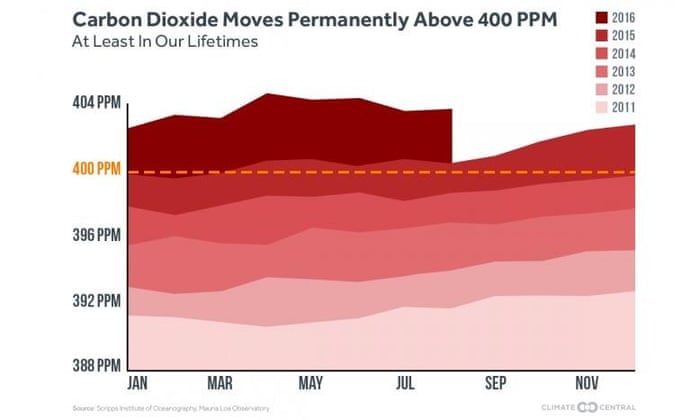
Image from The Guardian, 28 Sept 2016 https://www.theguardian.com/environment/2016/sep/28/the-world-passes-400ppm-carbon-dioxide-threshold-permanently
The carbon emissions have reached that critical point of over 400ppm where we are standing on an edifice with only catastrophic climate disasters ahead of us. Do you want to close your eyes and keep going or stand up and save the world?


So I will be praying with Standing Rock on Sunday December 4th at 4pm in the UK. Already I have been asked what good will my prayer do from here. Truthfully I don't know, but I am going to do it anyway and I really hope that you can all join me with this and support the Standing Rock Water Protectors in every way that you can.